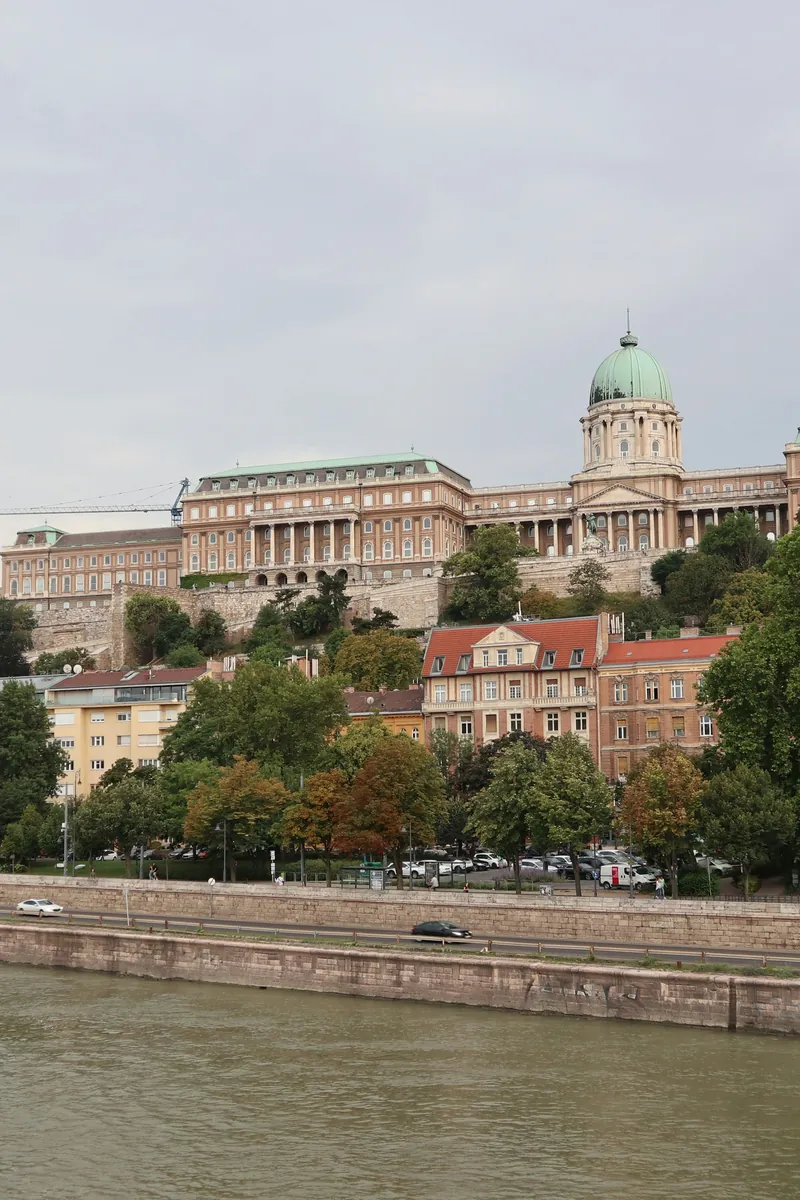
The Hospital in the Rock is a preserved emergency hospital and secret Cold War nuclear bunker hidden in the cave system beneath Buda Castle Hill. Construction began in 1939, on the orders of the city's wartime mayor, and the surgical centre was completed in 1944 by adapting the natural caverns in the castle rock into reinforced, bomb-proof wards. Designed for around sixty to seventy patients, it was pushed far beyond that limit during the Second World War, when the Siege of Budapest brought as many as six hundred wounded soldiers and civilians through its doors at once. Its own diesel generators kept the lights, ventilation and even the X-ray machines running while the city was pounded to rubble overhead, and its staff worked on without pause.
The hospital treated the wounded again during the 1956 Hungarian Revolution, and was afterwards quietly enlarged into a nuclear-and-chemical fallout bunker. Between 1958 and 1962 it was fitted with a poison-gas filtration system, a large water tank and two Ganz diesel engines, so that medical staff could shelter and keep working for around seventy-two hours after an attack. Classified as a top-secret military installation, its very existence was hidden from the public throughout the communist era. Only after restoration did it open to visitors, in 2007, as the Hospital in the Rock Nuclear Bunker Museum. Today its roughly 2,400 square metres of wards, operating theatres and bunker rooms are preserved almost exactly as they were, some fifteen metres below the surface.
The museum can be seen only on a guided tour of about an hour, led through the tunnels in a single group with a free audio guide available in nine languages. Its rooms are peopled by around two hundred lifelike wax figures — surgeons at the operating table, nurses tending the wounded, exhausted patients on their cots — recreating the atmosphere of the siege and the Cold War years with unsettling precision. Alongside them sit original medical instruments, the bunker's ventilation and generators, and displays on the atomic age and civil defence. It is a sobering, deeply human place rather than a conventional museum, and it has become one of Hungary's most visited attractions since it opened its doors.